
Growth Mindset Plan
What is a Growth Mindset? Why is it important?
In order for us to become lifelong learners we must develop a “growth mindset.” As described by Dr. Carol Dweck, a person with a growth mindset believes that they can develop their abilities through hard work and dedication. These beliefs differ from those of a “fixed mindset,” who believe that abilities are set in stone and cannot be improved even with practice. You are either good at something or not and it will not change, due to this belief they also do not take on challenges out of fear of failure. Both mindsets begin to develop early on in life and are influenced by the environment around us. These polar opposite mindsets affect individuals' views on almost every aspect of life. Facing challenges, receiving feedback, competing/being compared to others can all trigger fixed mindset (Dweck, 2016). Having a growth mindset means approaching challenges as something new and exciting, taking feedback as a way to improve yourself and knowing that just because someone does something well, it does not diminish your worth. As educators, keeping a growth mindset is important to help students as they navigate through new challenges. We must also keep a growth mindset in order to improve ourselves as we strive for continuous improvement. Overall a growth mindset cultivates a positive attitude towards learning and personal development, fostering a lifelong love of learning and curiosity.
Four Steps to Changing Your Mindset
Scott Jeffrey outlines Carol Dweck's four simple steps to changing from a fixed to a growth mindset.

Image created on Canva
First we must be able to identify the “fixed mindset” voice when it begins to emerge. This is the voice in our mind saying “I can’t do this” or “this is too hard” or even “I am just not good at this.” Everyone has heard this voice at some point while facing a challenge. These fixed mindset beliefs can prevent us from trying new things and taking on new challenges. Ultimately this can prevent our personal and professional growth. Instead of dwelling on the words of this voice, we must talk back to it with the growth mindset. Instead of “I can’t do this,” think “I haven’t learned this yet.” Finally in order to change this mindset, we must take action. This can mean continuing to learn new things and not give up when a complication arises. Take feedback as ways to improve versus criticism. Take on challenges as something new and exciting and not a possible failure. It begins with our minds but it must be followed by actions.
In the classroom, it's important to reassure students that having these thoughts is normal, but we shouldn't allow them to discourage us. As adults who influence young minds, our students observe how we approach challenges and learn directly from our example. Our mindset significantly influences theirs.
The Power of "YET"
The word “yet” is a powerful tool with limitless possibilities. Instead of holding you back with “I can’t do it” or “it’s too hard” the word “yet” can simply mean something we haven't learned to do, not something that we will never be able to do. It is crucial for the progress towards mastery be celebrated in the classroom, we all start somewhere and there is always something we do not know YET. Many students are discouraged when they cannot understand the content right away but the word “yet” can help them be patient with their learning and themselves.
This simple but powerful word has particular significance in the context of the growth mindset because it signifies the ongoing learning process rather than limitations or impossibilities. In the classroom we are all learners, educators and students alike. It is crucial for students to know that even as adults there are things we haven't learned YET as well. I will continue to emphasize the concept of 'yet' to my students as they learn, while also advancing in my journey as an educator.

Image from Canva
Resources for Growth Mindset in the Classroom
There are countless resources to help incorporate growth mindset in the classroom, below are a few that I plan to use to help my students develop their mindsets.

As an early elementary school teacher, this book is a great way for students to comprehend the limitless possibilities in their future. This can set the foundation to a growth mindset while still being engaging and age appropriate.

Y Is for Yet takes a unique approach to the alphabet book genre, using ABCs to introduce the concept of growth mindset and its endless possibilities. From Ability to Zany, children explore new vocabulary that broadens their self-perception as learners.

A book filled with mindful affirmations designed to instill in students a sense of boundless possibilities, where no obstacle is too formidable. It also empowers students to cultivate a growth mindset, providing them with tools to counteract the influence of a fixed mindset.
Resources for Educators
Books

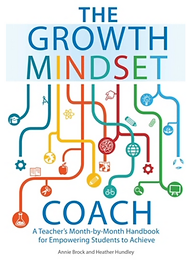
There are numerous resources available to educators to foster and continually cultivate a growth mindset, benefiting both their own professional growth and the well-being of their students. Carol Dweck's extensive research and insights on fixed and growth mindsets offer invaluable perspectives that can greatly benefit our understanding and application of these concepts.
My Growth Mindset
As I finished my first year teaching and embraced the challenge of entering the ADL program, I truly realized the impact a mindset can have. Being an educator is a challenge in itself on a daily basis, being a new teacher learning the ropes is a whole challenge on its own. Having a growth mindset allowed me to put my best efforts everyday for my students and it allowed me to show my students that I will always continue learning. I was very transparent with my students about taking on yet another challenge when I decided to start my journey in the ADL program. This allowed them to see me not only as their teacher but also as a learner. Children look to adults as examples to follow, by allowing them to see me as a lifelong learner I believe they will also seek continuous growth. I plan to continue to promote a growth mindset daily in my classroom, through the power of YET, through reading aloud and through authentic relationships I build with my students.

AI created image
References
Dweck, C. (2016). Mindset: The new psychology of success. Ballantine Books.
Dweck, C. (2016). What having a “growth mindset” actually means. Harvard Business Review. https://hbr.org/2016/01/what-having-a-growth-mindset-actually-means
Jeffrey, S. (2024). How to change your mindset from fixed to growth: A definitive guide. Ceosage. Retrieved from https://scottjeffrey.com/how-to-change-your-mindset/
Stanford Alumni. (2014, October 9). Developing a Growth Mindset with Carol Dweck [Video]. https://www.youtube.com/watch?v=hiiEeMN7vbQ