Professional Learning Outline
As educators, we are dedicated to providing our students with high-quality instruction. However, it’s essential that we also prioritize our own professional growth to ensure we’re delivering the best possible learning experiences. To move away from the traditional sit-and-get model of professional development, I’ve created an outline that aligns with the Five Principles of Effective Professional Learning as described by Allison Gulamhussein. This new professional learning approach will focus on teaching one grade level for a year how to effectively implement the rotational model of blended learning in the classroom, as outlined in my innovation plan. You can read more about my innovation plan here.
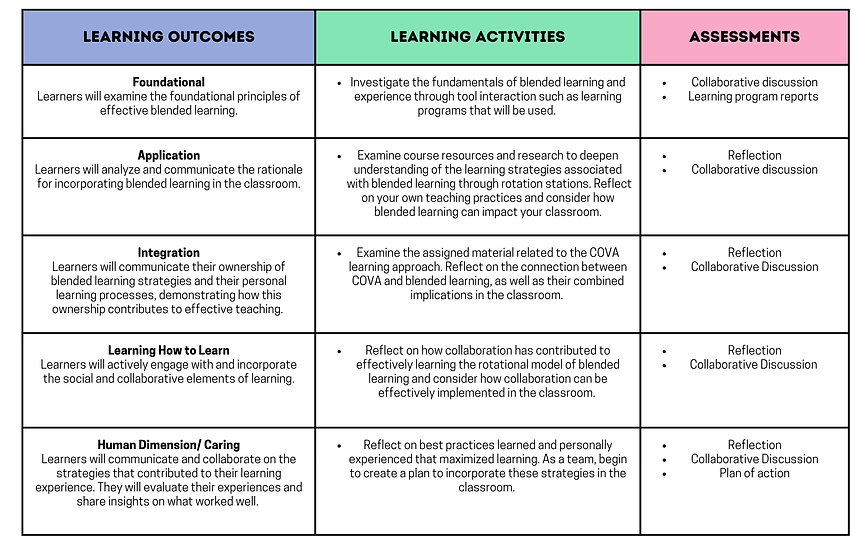
Before developing the outline for this new professional learning approach, it’s important to start with our end goal in mind. To facilitate this, I’ve created a three-column table and established a Big Hairy Audacious Goal (BHAG) to guide our efforts. My BHAG is to complete a year of professional learning that embodies the five key principles of effective professional development in order to empower teachers not only to implement the rotational model of blended learning effectively but also to model these practices for their peers.
Schedule/ Timeline
The goal of this professional learning initiative is to be ongoing throughout an entire year, with adjustments being made when required based on need. By the end of the year, one full grade level will have successfully integrated blended learning in their classrooms, setting the stage for expanding this professional learning and blended learning initiative to other grade levels in the following year.
June
2025
Ensure that the blended learning curriculum is completed and aligned with grade-level standards in collaboration with leadership. We recognize the need to change PL, in order to convince others we will present using the Call to Action presentation.
July
2025
The professional learning curriculum for piloting and implementing the rotational model of blended learning has been completed and reviewed by admin.
August
2025
Initiate in-person training sessions during summer PD days with the grade level team and a member of admin. The school year will commence alongside ongoing bi-weekly meetings to finalize our rollout plan for the year. During these meetings, we will establish start dates, discuss ideas and questions, and share potential best practices.
September 2025
Teachers will have the opportunity to observe me modeling the rotational model of blended learning in the classroom, building on what they experienced during the summer. Following this, they will start to introduce the initiative by teaching students about each step of the process.
October- December
2025
We will continue to meet bi-weekly throughout these months to ensure that support is provided at every step. Observations by administration and leaders will begin as we start evaluating best practices. During district PD days, we will have demo days where one teacher will volunteer to model.
These months will be critical as we roll out this initiative.
January
2026
During this month's PD days, we will meet to evaluate what is working, identify areas for improvement, and discuss potential solutions. Additionally, we will consider expanding the blended learning program to incorporate other online resources as needed, based on student progress and program completion.
February- March
2026
Meetings will continue but will be adjusted based on need. Previously discussed changes will be implemented, and modeling will occur on a monthly basis, reflecting the best practices observed in the classroom.
May
2026
Conclude the school year by celebrating the successful implementation of the rotational model of blended learning. We will also begin discussing the plan for summer professional development, including new roles the team will assume as they take on leadership responsibilities to expand the initiative to other grade levels.
Audience and Their Needs
The audience for this professional learning initiative consists of one grade-level team of teachers who will focus on learning and implementing the rotational model of blended learning in their classrooms. Additionally, administrators will be involved in this initiative to gain insights that will enable them to support the team effectively when it comes time to expand to other grade levels. Together, they will also explore the COVA learning approach, understanding how the integration of both will enhance the effectiveness of their teaching and student learning.
Fostering Collaboration
To foster collaboration in this initiative, I will create a supportive environment where teachers feel empowered to share their experiences insights. Regular meetings will be held to encourage open dialogue, allowing everyone to discuss challenges and successes. Additionally, I will facilitate peer observation opportunities, where teachers can learn from one another. By valuing each teacher’s input and fostering a sense of shared ownership, we can create a culture of collaboration that enhances the overall success of the initiative.
Who will lead?
The leaders for this initial implementation of blended learning this year will be myself and an administrative member with experience in blended learning. I will lead the first few professional development sessions before we fully transition into collaborative efforts. By the end of the year, the entire team will step into leadership roles for this initiative, equipped with the experience needed to guide future implementations to other grade levels.
Resources
The following resources will be essential to enable teachers to learn the rotational model of blended learning:
-
Laptops
-
Smartboards/Clever boards
-
Wifi
-
3 Column Chart
-
Access to online programs
-
Innovation Plan


References
Gullamhussein, A. (n.d.). Effective Professional Development in an Era of High Stakes Testing. Retrieved from http://www.centerforpubliceducation.org/Main-Menu/Staffingstudents/Teaching-the-Teachers-Effective-Professional-Development-in-an-Era-of-High-Stakes-Accountability/Teaching-the-Teachers-Full-Report.pdf
Harapnuik, D. (2018). COVA model. It’s about learning: Creating significant
learning environments. Retrieved from http://www.harapnuik.org/?page_id=6615